
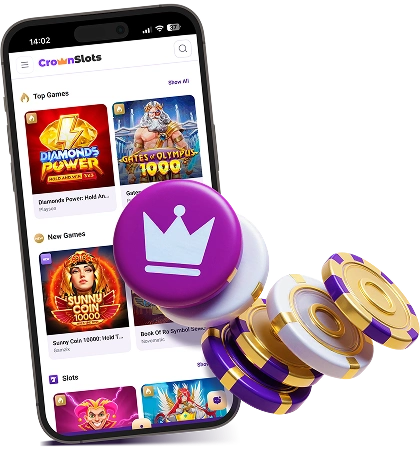
Using a mobile casino through a browser can be convenient, but account security deserves attention before money or identity documents are involved. Crownz presents browser-based mobile access, alongside verification checks covering identity, residence and payment ownership. Its public information also raises an important distinction between what is described as available and what has been independently confirmed for Great Britain. The informational material is available at https://www.stlukeschurchtorquay.co.uk/gb/. The practical approach is to assess access, verification and account controls separately rather than assuming a mobile site offers the same protections as a native app.
What should be checked before creating an account?

Begin with the operator’s current terms, privacy information and jurisdictional position. A website displaying sterling references or accepting visitors from a particular location does not, by itself, prove authorisation to provide gambling services there. The available material reports that the operator does not hold a UK Gambling Commission licence, so people in Great Britain should not treat the site as UK-authorised merely because the interface is in English or shows GBP equivalents.
Next, examine whether the registration process explains which personal details are collected and why. The stated form may request login credentials, contact information, country and preferred currency. Those details should be entered accurately and consistently. A mismatch between the registration information, identity document and payment account can create delays or restrictions later, particularly when a withdrawal or anti-fraud review begins.

Mobile users should also verify that they are visiting the intended domain before entering credentials. Check the spelling in the browser address bar, avoid links from unsolicited messages and do not rely solely on a familiar logo or colour scheme. A browser-based mobile service is not automatically a downloadable app, and the available information does not confirm a native iOS or Android application. Treat unexpected app files or requests for remote access as warning signs.
How does identity verification usually affect access?
Verification can involve more than confirming an email address. The published information says that identity evidence, proof of residence and financial or payment documents may be requested for anti-fraud checks or before a withdrawal. In some circumstances, financial statements may also be requested. This means verification should be regarded as a possible part of the account lifecycle, not an unusual event that only occurs when something has gone wrong.
Prepare documents carefully if they are requested, while using only the submission route identified by the operator. Images should be readable, current and consistent with the registered details. Do not send identity documents through an unverified social-media account or an unfamiliar email address. If a request seems excessive or unclear, ask support why the document is needed, how it will be handled and whether an alternative is available under the stated process.
Payment ownership is another important condition. Deposits must use a method in the account holder’s own name, and third-party deposits may be reversed. Multiple accounts and account sharing are prohibited in the published terms. Incomplete or unsuccessful verification can lead to restrictions or closure, so it is sensible to understand these conditions before depositing. No particular document list, review time or approval outcome should be assumed unless it is expressly stated for the account.
Which mobile habits reduce the risk of account takeover?
Use a unique password that is not shared with email, banking or social-media accounts. A long passphrase can be easier to remember than a short collection of symbols, provided it is not based on a name, birthday or predictable phrase. Store it in a reputable password manager rather than in an unsecured notes application. Never disclose the password to someone claiming to be support, even if the message appears urgent.
Keep the phone’s operating system, browser and security software updated. Install applications only from the device’s official store, and review permissions before approving them. Avoid signing in on public or shared devices, especially where the browser may save passwords automatically. On a personal phone, use a screen lock and biometric protection where appropriate. The National Cyber Security Centre’s online security guidance offers general advice on passwords, updates and protecting accounts; it does not confirm any casino-specific feature.
Be particularly cautious with links promising a bonus, urgent verification or an account warning. Instead of following the message, open the browser and enter the known website address manually. Check for unusual spelling, unexpected redirects and requests to install software. If a session remains open on a shared device, sign out fully and clear saved credentials. These simple steps reduce exposure to phishing, stolen sessions and accidental disclosure of personal information.
What should happen when a login or verification message is missing?
A missing email does not necessarily mean that an account has failed. First check the spam, junk and promotions folders, then search for the operator’s name or the relevant subject line. Confirm that the registered email address was entered correctly and allow for ordinary delivery delays. If the page offers a way to resend the message, use that option once rather than repeatedly requesting codes that may arrive out of sequence.
For a forgotten password, the stated recovery route is to select “Need Help?” and then “Forgot Password” on the login page. The registered email address is entered so that reset instructions can be sent. Use this process only through the verified website. If the reset message does not arrive, do not create a second account as a workaround, because the published terms prohibit multiple accounts.
Persistent access, verification or deposit problems can be raised through live chat, which the available information describes as operating around the clock. Keep conversations factual and avoid sending full card numbers, passwords or one-time security codes. Support may need account details to investigate, but sensitive information should be provided only through the recognised channel and only when the request is clearly connected with the issue.
How can account controls support safer decisions?
Security is not limited to preventing unauthorised access. Account controls can also reduce the risk of impulsive spending from a mobile device. The available information describes daily, weekly and monthly deposit, loss and wager limits, together with cooling-off and self-exclusion options. Consider setting limits before depositing, when decisions are less likely to be influenced by excitement or the pressure to recover losses.
Limit changes may not all operate in the same way. Decreases are described as applying immediately, while increases require email confirmation and may be delayed until the current limit expires. Cooling-off blocks deposits and promotions but allows withdrawal of remaining funds. Self-exclusion disables the account and blocks deposits and withdrawals for the selected period. Read the precise wording before confirming a control, particularly if access to funds may be needed.
Keep a private record of the limits selected, confirmation emails and any support conversation. If a control does not appear to work as expected, stop depositing and contact support through the recognised channel. Do not assume that closing a browser tab, deleting an app or switching devices cancels an account restriction. Responsible-gambling tools can help manage access, but they are not a substitute for independent advice when gambling is becoming difficult to control.
Mobile account security questions answered
Is browser access the same as having a mobile app?
No. The available information confirms access through a mobile browser but does not establish a dedicated iOS or Android application. Do not assume app-store availability, push notifications or app-specific security features. If an application is offered, verify its source and permissions before installation, and avoid downloading files from unsolicited messages.
Can verification be requested before a withdrawal?
Yes, verification may be requested before a withdrawal, although the exact timing can depend on the account and transaction. Identity, residence and payment documents may be required. Use accurate details and a payment method in your own name. Check the stated requirements rather than assuming one document set applies to everyone.
What should be done if a suspicious login is suspected?
Stop using the account on the affected device, change the password through the recognised website and secure the associated email account. Review recent activity and contact support through the published channel. Do not share passwords or security codes. If payment details may be exposed, contact the payment provider promptly using its official contact method.
